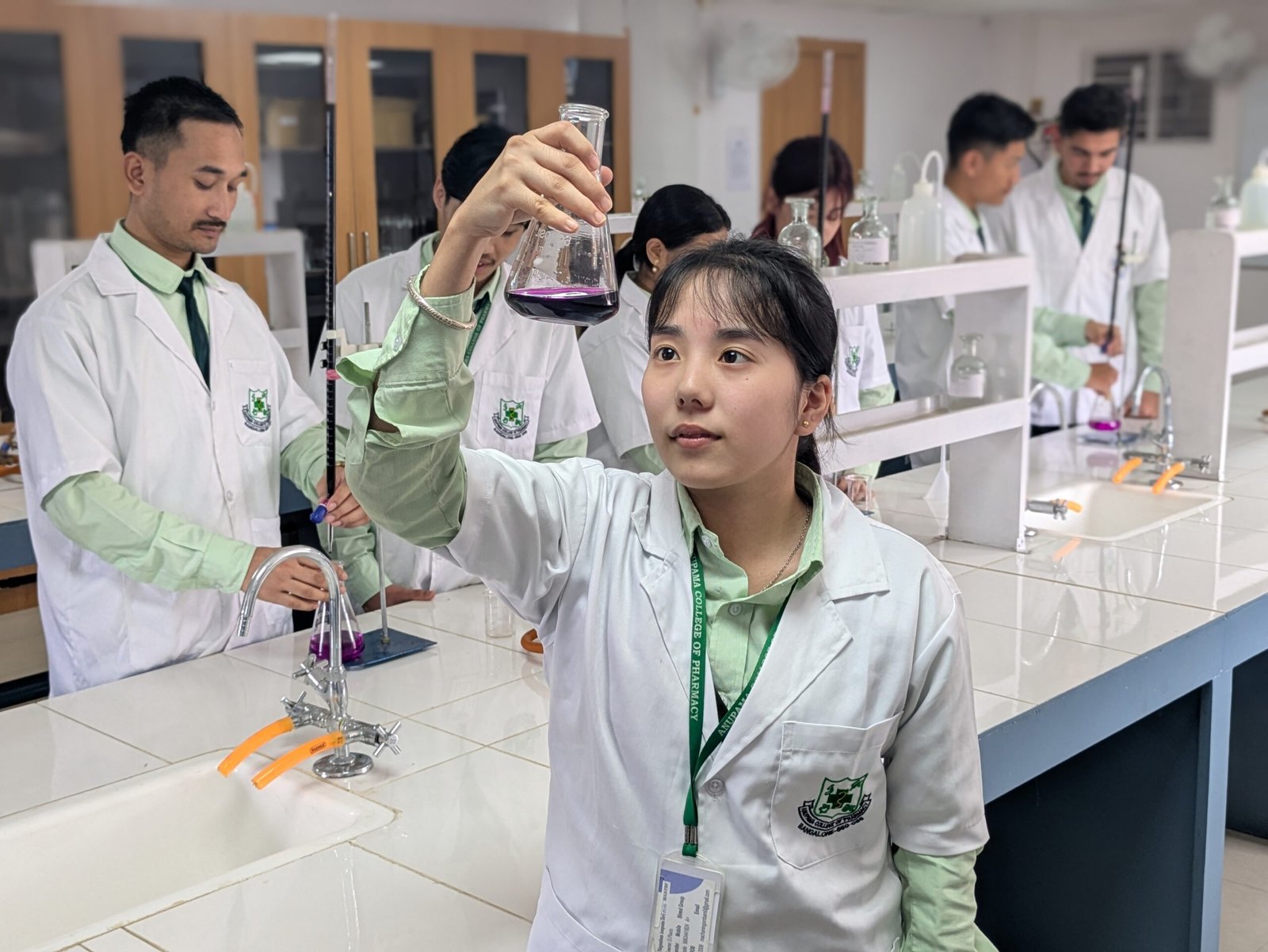
Department of Pharmaceutical Chemistry
The Department of Pharmaceutical Chemistry serves as the backbone of pharmaceutical sciences and plays a fundamental role in shaping the scientific understanding of drugs. This discipline bridges chemistry with medicine and focuses on the complete chemical lifecycle of a drug—from its design and synthesis to its analysis and quality evaluation.
The department broadly covers three major areas:
Medicinal Chemistry, Pharmaceutical Analysis, and Organic & Inorganic Pharmaceutical Chemistry. Students are trained to understand how chemical structures influence biological activity, how drugs are synthesized and modified, and how analytical techniques are used to ensure drug safety, purity, and efficacy.
Special emphasis is placed on drug design principles, structure–activity relationships (SAR), impurity profiling, analytical method development, and validation techniques. Through systematic laboratory training, students gain hands-on experience in chemical analysis, assay procedures, and instrumental methods that are widely used in pharmaceutical industries and quality control laboratories.
The department is equipped with well-established laboratories, modern analytical instruments, and advanced infrastructure that support both teaching and practical learning. A strong academic support system, including a wide range of textbooks, reference materials, and scientific journals, helps students stay aligned with current developments in pharmaceutical chemistry. The department aims to develop technically sound, analytical, and industry-ready pharmacy professionals.